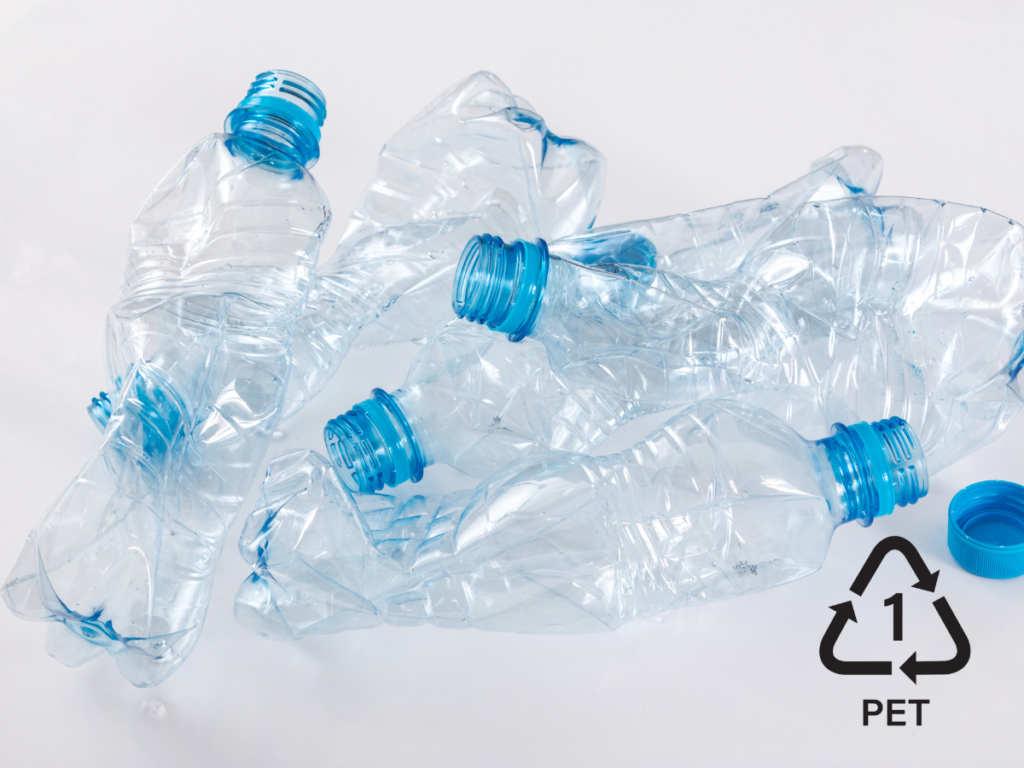
On June 30 2026, the European Commission adopted an Implementing Decision establishing harmonized rules for calculating, verifying and reporting recycled plastic content in single-use PET beverage bottles. The measure, part of the Commission’s December 2025 plastics package, introduces a methodology that covers chemically recycled content alongside the mechanical recycling methods already addressed under existing rules. For the beverage packaging and recycling sectors, it represents a significant step toward a consistent, EU-wide basis for demonstrating recycled content compliance.
TABLE OF CONTENTS
Why the New Methodology Was Needed
Under the Single-Use Plastics Directive, producers are required to incorporate 25 % recycled plastic in PET beverage bottles from 2025, rising to 30 % in all plastic beverage bottles from 2030. Meeting those targets requires a reliable way to measure and verify how much recycled content a bottle actually contains, and until now, the existing framework only addressed mechanically recycled PET.
The gap mattered because mechanical recycling, while the most widely used method, cannot process every waste stream. Plastic waste containing food residues, additives or mixed materials is often unsuitable for mechanical recycling. In these cases, chemical recycling can complement mechanical processing by breaking plastics down into smaller molecules that can be used as feedstock for new plastics, including for high-quality applications such as food contact packaging. Without a methodology to calculate chemically recycled content, that route could not be reliably counted toward recycled content targets.
How the Calculation Works
The new methodology instructs economic operators to calculate the total weight of plastic, both recycled and non-recycled, in the PET bottles they place on a member state’s market in a given year. The weight of recycled plastic must be determined at the point when the bottle is placed on the market, based on data obtained at defined calculation points for each part of the bottle.
Two features are worth noting for compliance purposes. First, the methodology applies to any recognized recycling technology, both mechanical and chemical, ensuring a level playing field between different approaches. Second, mass balance accounting is applied at facility level, with attributed amounts not permitted to be transferred between different facilities of a company. Operators may adjust their calculated figures to account for exports or movements of bottles between member states. Where a bottle component consists only of post-consumer plastic recycled through a process compliant with Regulation (EU) 2022/1616 on recycled food contact plastics, that recycled percentage is applied to the weight of the relevant bottle part.
The Phased Geographic Scope
One of the more consequential features of the decision is its phased approach to which recycled material counts toward EU targets, based on where it originates:
- Initially, only recyclate from EU member states and European Economic Area (EEA) countries will count, since compliance with EU environmental rules can be fully verified.
- From 21 November 2027: Recycled plastic from countries where the OECD Decision applies will also count, unless excluded under the Waste Shipment Regulation.
- Non-OECD countries: Material will count where covered by arrangements ensuring equivalent standards for human health and environmental protection, aligned with instruments such as the Waste Framework Directive and the PPWR.
This staged recognition is designed to ensure that recycled content counted toward EU targets meets credible, traceable and environmentally sound standards, rather than simply crediting any material labelled as recycled regardless of its origin.
What Happens Next
The Implementing Decision was supported by member state representatives at a meeting of the Waste Technical Adaptation Committee in February 2026. It will be published in the Official Journal shortly and will enter into force 20 days after publication.
For beverage producers, recyclers and resin suppliers, the practical significance is greater regulatory clarity. A single, harmonized methodology reduces the risk of divergent national interpretations of what counts as recycled content, a persistent source of uncertainty for companies operating across multiple member states. The recognition of chemical recycling also provides a clearer route to compliance for waste streams that mechanical recycling cannot handle, which is particularly relevant for food contact applications where quality requirements are strict.
Conclusion
The Commission’s new PET bottle methodology addresses a genuine gap in the recycled content framework and provides the recycling sector with a clearer, more consistent basis for investment. By recognizing both mechanical and chemical recycling and establishing traceable rules for geographic origin, the decision supports the Single-Use Plastics Directive’s targets while attempting to preserve the integrity of recycled content claims. Its influence is also likely to extend beyond beverage bottles; the methodology is expected to inform recycled content approaches under the wider EU packaging framework as circular economy requirements continue to tighten.
Share this article on: