For nearly six years, chemical producers, polymer manufacturers and the broader packaging sector have tracked the progress of REACH 2.0, the anticipated comprehensive overhaul of the EU’s foundational chemicals regulation. On 27 April 2026, EU Environment Commissioner Jessika Roswall confirmed before the European Parliament’s ENVI Committee that the revision has been officially shelved. Citing the need for market “certainty and predictability” amid ongoing economic and geopolitical pressures, the Commission has chosen industrial stability over structural regulatory change.
TABLE OF CONTENTS
Why the Revision Was Halted
The decision did not come without warning. In September 2025, the EU Regulatory Scrutiny Board (RSB) issued a negative opinion on the revision proposal’s impact assessment, flagging unresolved issues around risk management, data integrity and compliance costs. The assessment concluded that executing a full regulatory rewrite under current macroeconomic conditions risked negative consequences for industrial competitiveness and supply chain stability.
Industry pressure played a significant role. The German Chemical Industry Association (VCI), representing Europe’s largest chemical producing nation, lobbied explicitly against the revision, warning that “competitiveness needs breathing space, not another round of regulatory shock.”
What the Revision Would Have Changed
Had REACH 2.0 moved forward, the compliance burden for chemical and packaging businesses would have increased significantly. Among the most consequential planned changes were fixed ten-year validity limits on existing chemical registrations, requiring companies to resubmit dossiers periodically and, most relevantly for packaging manufacturers, the inclusion of polymers under REACH registration requirements for the first time. Currently, polymers sit outside REACH’s registration scope, a long-standing gap the revision had intended to close. That obligation is now off the table indefinitely.
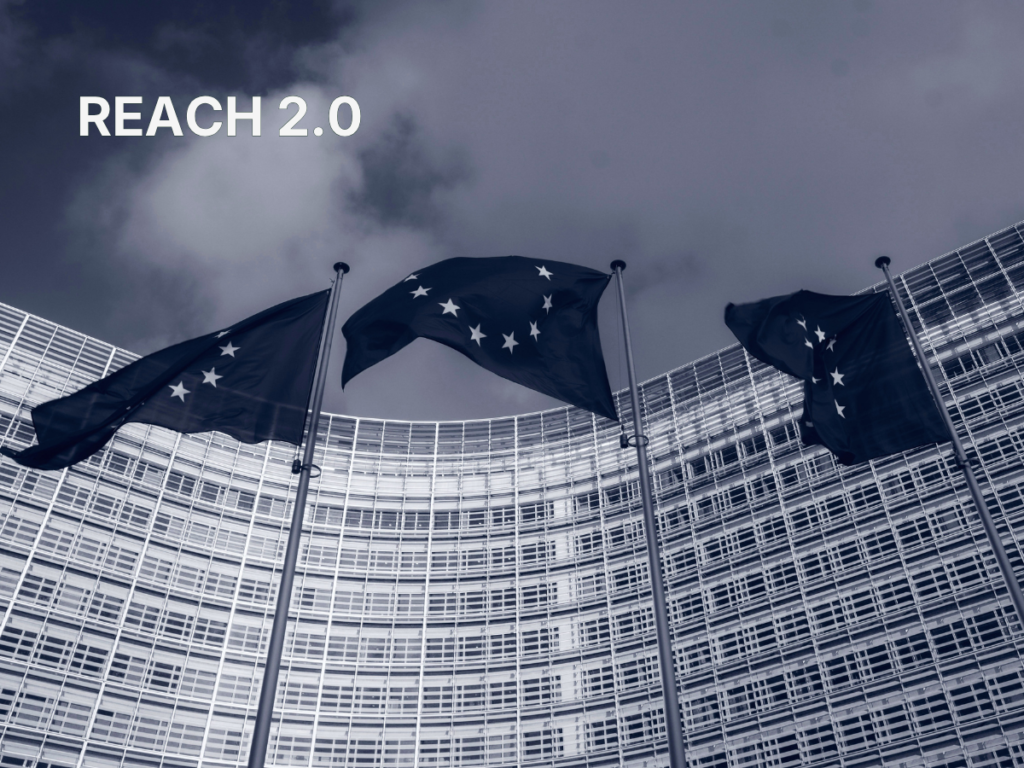
What Changes Instead: Comitology and Focused Enforcement
The shelving of the comprehensive revision does not mean regulatory activity under REACH stops. According to Food Packaging Forum, Commissioner Roswall confirmed the Commission will shift its focus toward “simplification and modernisation” of existing provisions, primarily through comitology, a process that allows technical updates to REACH annexes without the full co-legislative procedure. This means targeted restrictions on specific chemical groups can be introduced or tightened relatively quickly, without reopening the foundational regulation.
In parallel, enforcement is becoming more focused. ECHA is gaining enhanced authority to revoke non-compliant registration dossiers, regulatory bodies are moving toward group evaluations of entire substance families rather than case-by-case assessments and there is a specific push to close enforcement gaps around imported goods. The SVHC Candidate List continues to expand through routine updates and the PFAS restriction proposal remains on track for publication by the end of 2026.
Technical Implications for Material Performance
One consequence of the ongoing adjustment of REACH technical annexes that deserves attention is the impact on material formulations. When manufacturers modify additives, plasticizers or stabilizers to comply with updated restrictions, the physical performance of the material can shift in ways that are not immediately obvious. Changes to specific chemical components can affect a polymer’s crystallization behavior, surface friction coefficients or mechanical properties. For packaging materials, this means that any reformulation driven by REACH compliance should be accompanied by verification of essential performance parameters, including puncture resistance, tear propagation and barrier performance for oxygen and moisture transmission.
Conclusion
The decision to shelve REACH 2.0 offers a period of predictability for businesses that had been preparing for significant structural change. However, it would be a mistake to read it as a relaxation of chemical oversight. Targeted enforcement through comitology, expanding SVHC lists and the approaching PFAS restriction ensure that compliance demands remain active. Businesses should continue to monitor REACH developments closely and ensure that any material reformulations prompted by updated restrictions are verified against the performance requirements their packaging needs to meet.
Even with the revision shelved, existing REACH obligations still apply and Pack-Lab’s chemical analysis includes REACH compliance testing.
Share this article on: