TOMRA Reuse has installed two automated return machines at Freiburg Central Station, marking the first integration of automated reusable cup returns into an existing urban reuse system in Germany. The machines accept cups from RECUP, a reusable packaging network for food and beverage businesses, and allow consumers to return cups at any time without counter interaction, with the deposit refunded instantly to a digital payment method.
TABLE OF CONTENTS
A First for Germany
Freiburg is described by TOMRA as the first German city to embed automated returns within an existing reusable packaging framework. The city was a deliberate choice: Freiburg already has an established culture of reusable packaging and operates a local packaging tax that actively incentivizes reusables over single-use alternatives. The infrastructure at the central station integrates with the RECUP network rather than replacing it, meaning consumers can return cups either at participating cafés, as they would normally, or at the automated machines which operate around the clock without requiring staff assistance.
The machines are currently configured to accept RECUP cups only, but TOMRA has indicated that the infrastructure is designed to support additional reusable packaging formats in the future, extending the potential scope of the system beyond cups.
The Technology Behind the Return
TOMRA Reuse provides both the physical return infrastructure and the supporting digital platform for the Freiburg installation. The machines automatically identify the cups upon return, with no need for manual verification. The deposit, paid by the consumer when purchasing a drink in a RECUP cup, is credited back immediately to their chosen digital payment method upon return.
This zero-friction return experience is central to the model’s effectiveness. High return rates in deposit and reuse systems are closely correlated with convenience: the easier it is to return packaging, the higher the participation rate. Embedding return infrastructure in such a high-traffic location addresses one of the persistent challenges of urban reuse systems: the requirement to return packaging to a participating outlet, which may not always be convenient for the consumer.
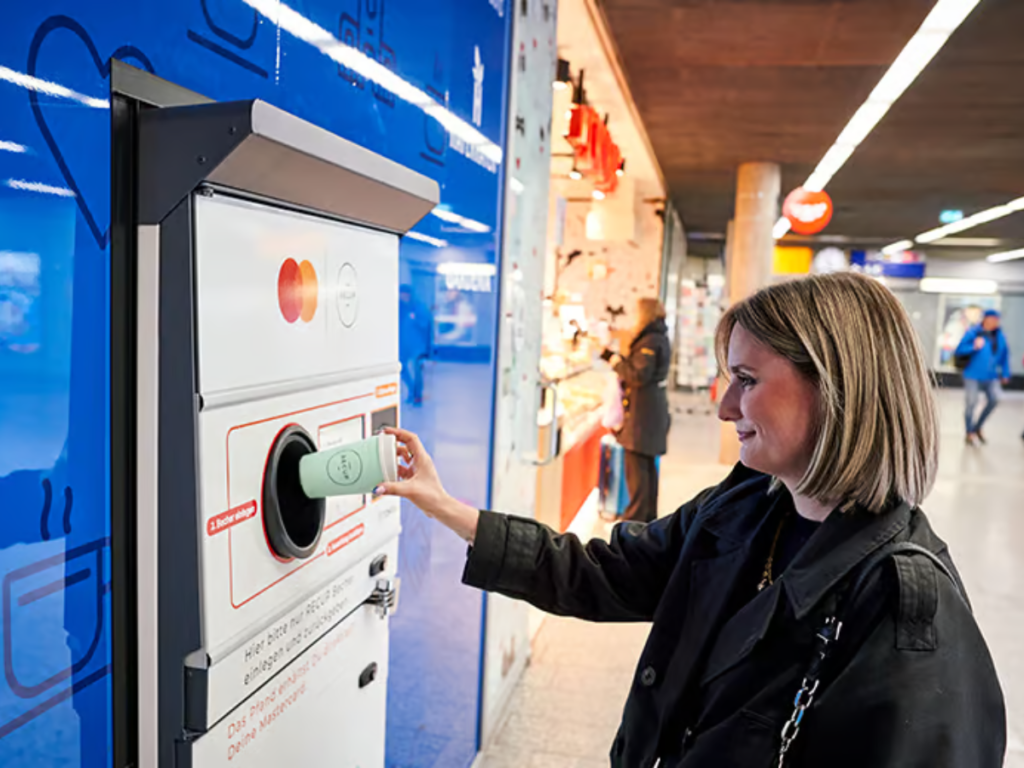
Image source: TOMRA Group
The Broader Context: Reuse Under the PPWR
The Freiburg installation arrives at a moment when reusable packaging systems are moving from pilot projects to policy requirements. The PPWR mandates reuse targets for specific packaging categories, with member states required to ensure that infrastructure for reuse systems is in place as the regulation begins to apply from August 2026. Germany, with its long-established deposit return system for beverage containers and a growing network of urban reuse initiatives, is among the better-positioned markets for this transition.
Conclusion
The Freiburg installation is a practical demonstration of what reusable packaging infrastructure looks like when it is integrated into existing urban systems rather than built in parallel. The combination of automated returns, instant digital deposits and round-the-clock availability addresses the convenience barrier that has historically limited reuse participation rates. Whether this model scales depends on the willingness of municipalities, transport operators and packaging networks to invest in shared infrastructure.