bpa bps bisphenol a

EU Ban on Bisphenol A in Food Contact Materials

In December 19, 2024, the European Commission (EC) introduced Regulation (EU) 2024/3190, enforcing a strict ban on bisphenol A (BPA) and other hazardous bisphenols in food-contact materials. This measure aims to enhance consumer safety by eliminating harmful chemicals from products like plastics, coatings, adhesives, and printing inks.   The Ban This regulation enforces a broad…

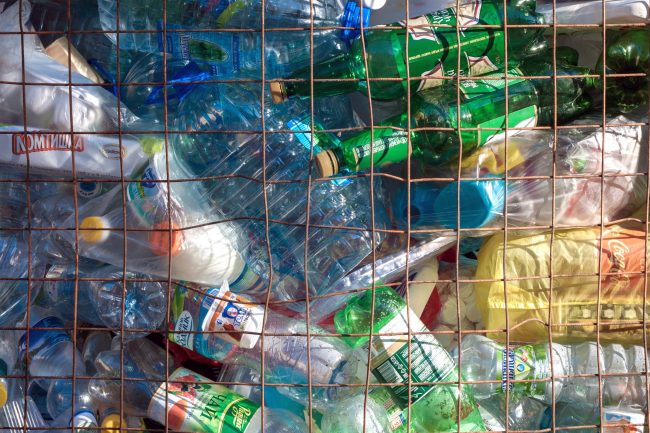
plastic waste for PPWR

PPWR Formally Adopted by The EU Council

On 16th of December, the EU Council formally adopted the Package and Packaging Waste Regulation (PPWR), aimed at reducing packaging waste and promoting sustainability. The rules set binding targets for re-use, restrict specific single-use packaging types, and require businesses to minimize packaging across its entire life cycle.   Safe, Sustainable, and Recyclable Packaging The regulation…

Germany Regulations on Food Contact Materials: Key Updates for 2024 - Paper food packaging

Germany Regulations on Food Contact Materials: Key Updates for 2024

In August 2024, the German Federal Institute for Risk Assessment (BfR) announced significant updates to its recommendations for materials and articles that come into contact with food. These changes, which apply to silicones, paper and board, specialized baking papers, and temperature-resistant coatings, are already in effect. While all five revised guidelines introduce noteworthy updates, the…

EFSA Re-evaluation of Silicon Dioxide (E 551) as a Food Additive for Infants

EFSA Re-evaluation of Silicon Dioxide (E 551) as a Food Additive for Infants

On October 17, 2024, the European Food Safety Authority (EFSA) published an updated scientific opinion on the safety of silicon dioxide (E 551) as a food additive. Commonly used as an anti-caking agent, E 551 prevents powdered foods from clumping together and is widely permitted in the EU for various food products, including those intended…

The global push to restrict PFAS usage signals an urgent need to address the risks posed by these persistent substances.

Europe, Japan and California Take Action to Regulate PFAS

A global movement to regulate per- and polyfluoroalkyl substances (PFAS), a group of synthetic chemicals known for their environmental persistence and health risks, is intensifying. Recently, the European Union, the State of California and Japan introduced new restrictions targeting various PFAS compounds. These include defluorohexanoic acid (PFHxA), perfluorooctanoic acid (PFOA), and PFOS-related substances, focusing on…

single-use plastic ban

FPA Calls for Stricter Enforcement on UK Single-Use Plastic Ban

The Foodservice Packaging Association (FPA) has raised attention to ongoing issues with the UK’s single-use plastic ban (SUP), pointing out that some retailers and online sellers continue to sell items included in the prohibition. According to the FPA, certain sellers are using loopholes, such as labeling plastic cutlery as reusable, to avoid restrictions. The FPA…

The New EU Restrictions on PFAS Chemicals - soaking plastic jacket

The New EU Restrictions on PFAS Chemicals

The European Commission has recently announced new regulations to limit the use of undecafluorohexanoic acid (PFHxA) and its related substances, a sub-group of the widely scrutinized per- and polyfluoroalkyl substances (PFAS). The decision is part of the EU’s broader efforts to protect both human health and the environment, under the REACH Regulation (1907/2006) which governs…

France’s New Plastic Ban in Schools by 2025

France’s New Plastic Ban in Schools by 2025

Starting January 1st, 2025, France will implement a significant environmental regulation under Article L-541-15-10 of the Environmental Code (CE), which introduces new restrictions on the use of plastic in food-related services in educational and childcare institutions. The ban will primarily affect collective catering in schools, universities, and facilities catering to children under six years old,…

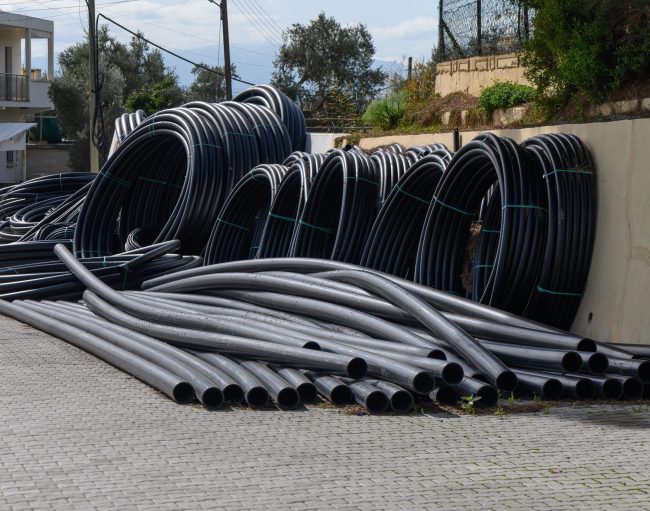
black plastic pipes - tnpp

TNPP to Be Added in EU Hazardous Chemicals List

Tris(4-nonylphenyl) Phosphite (TNPP), commonly used as an antioxidant in plastics and rubber, has been proposed for classification as a Substance of Very High Concern (SVHC) by French authorities. This is due to its degradation into 4-nonylphenol, a known endocrine disruptor.   What is Tris(4-nonylphenyl) Phosphite (TNPP)? Tris(4-nonylphenyl, branched and linear) phosphite (TNPP) is an industrial…

US Supports Global Plastic Production Caps in Policy Shift - Grey Plastic pellets

US Supports Global Plastic Production Caps in Policy Shift

In a significant change of policy, the United States has announced its support for a global treaty that aims to cap plastic production and restrict harmful chemicals, according to Reuters. This shift from the previous U.S. stance, which aligned with countries opposing such regulations, brings U.S. closer to other nations’ ambitions of advocating for international…