The Standing Committee on Plants, Animals, Food and Feed (SCoPAFF) approved on 13 May 2026 a draft amendment to Regulation (EU) 2023/915 (the European Contaminants Regulation) that, for the first time, establishes binding maximum levels for mineral oil aromatic hydrocarbons (MOAH) in food. Final adoption by the European Commission is targeted for the end of October 2026, with the first limits entering into force in 2027.
TABLE OF CONTENTS
MOAH are a complex group of substances found in mineral oils, with genotoxic and potentially carcinogenic properties. They can migrate into food from packaging materials, printing inks, adhesives, recycled paperboard and other sources in the supply chain. Until now, the EU had no legally binding limits. Enforcement relied on indicative levels issued by the SCoPAFF in 2022, which served as guidance for food control authorities but did not carry the force of law.
Categories Affected by the New Limits
The draft amendment establishes specific maximum levels for MOAH (C10-C50) across a wide range of food categories:
- Oilseeds and oil fruits
- Fats, oils and products with more than 50 % fat
- Tree nuts and pulses
- Cereals and cereal products (limits varying by fat content)
- Milk and dairy products (limits varying by fat content)
- Cocoa beans, cocoa mass and cocoa powder
- Spices, dried herbs, tea and herbal tea as ingredients in food
- Baby food and infant formula (limits varying by fat content)
- Food supplements
- Composite food containing listed raw materials (from 2030, limits varying by fat content)
- Composite food containing more than 15 % spices, dried herbs, tea or herbal tea (from 2030)
This is the first harmonized EU-wide legal framework for limiting MOAH in food. The limits replace the indicative SCoPAFF levels from 2022 and in many cases set higher thresholds. The previous indicative levels were derived from analytical limits of quantification rather than toxicological assessment.
New Sampling and Analysis requirements
Alongside the MOAH limits, the SCoPAFF also approved an amendment to Regulation (EU) No 333/2007 that, for the first time, incorporates specific requirements for the sampling and analysis of mineral oil hydrocarbons in food.
A notable change is the introduction of a higher limit of quantification (LOQ) for analytically complex matrices. For products such as spices, herbs, essential oils, food supplements and marine oils, an LOQ of up to 5 mg/kg will be accepted. For other product categories, lower LOQ thresholds apply, down to 0.5 mg/kg for dry, low fat foods and 1 mg/kg for foods with moderate fat content.
For complex cases, the regulation calls for advanced characterization using comprehensive two-dimensional gas chromatography coupled with mass spectrometry (GCxGC-MS/FID), in line with EFSA’s 2023 scientific opinion on mineral oil hydrocarbons.
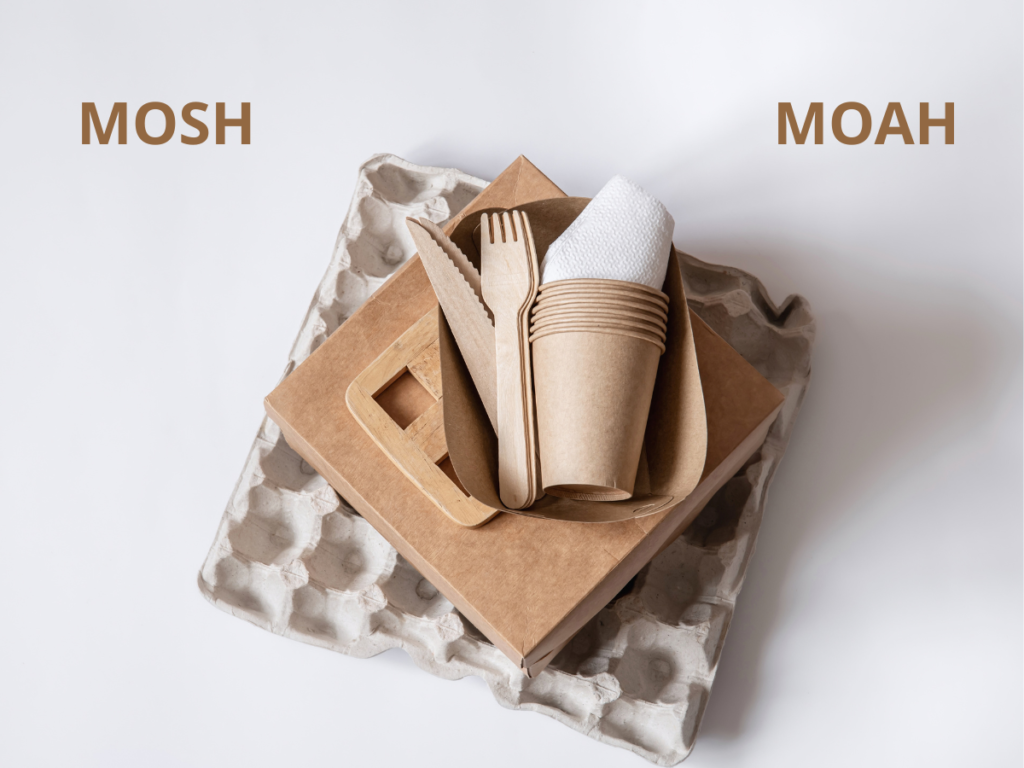
MOSH Monitoring Recommendation
The legislative package also includes a monitoring recommendation for mineral oil saturated hydrocarbons (MOSH) and MOAH for the period 2026-2029. While MOSH was assessed by EFSA as not posing a health concern at current dietary exposure levels, indicative levels will be established to support ongoing risk minimization efforts. The MOAH monitoring will cover product categories not included in the new maximum levels regulation, such as coffee, processed fruit and vegetables and flavorings.
Relevance for the Packaging Sector
For packaging producers and food manufacturers, the new MOAH limits have direct practical implications, since MOAH contamination in food frequently originates from packaging materials. Recycled paperboard, printing inks, mineral oil-based adhesives and direct contact with lubricated machinery parts are well-documented sources.
The transition from indicative levels to binding maximum levels changes the compliance landscape. Under the indicative system, MOAH findings above the SCoPAFF thresholds triggered investigation and corrective action but did not automatically render a product non-compliant. Under binding maximum levels, exceedances will constitute a regulatory violation subject to enforcement.
For companies supplying food contact packaging materials, this reinforces the need for MOSH/MOAH testing as part of routine quality assurance, particularly for recycled paperboard, where mineral oil contamination from recycled newspaper inks has historically been a significant source of MOAH migration into food. The fat/oil content-based limits of quantification are directly relevant for assessing MOAH Migration from packaging into food.
Conclusion
The adoption of binding MOAH limits marks the end of a regulatory process that began with EFSA’s first opinion in 2012. For the packaging industry, the practical message is that MOAH migration from packaging into food is now subject to enforceable limits rather than guidance. Companies that have already implemented MOSH/MOAH testing and functional barrier strategies are well positioned. Τhose that have not should review their packaging materials and testing protocols before the limits enter into force in 2027.
Pack-Lab’s chemical analysis services include MOSH/MOAH testing for food contact materials and packaging. Contact us to discuss your testing requirements.