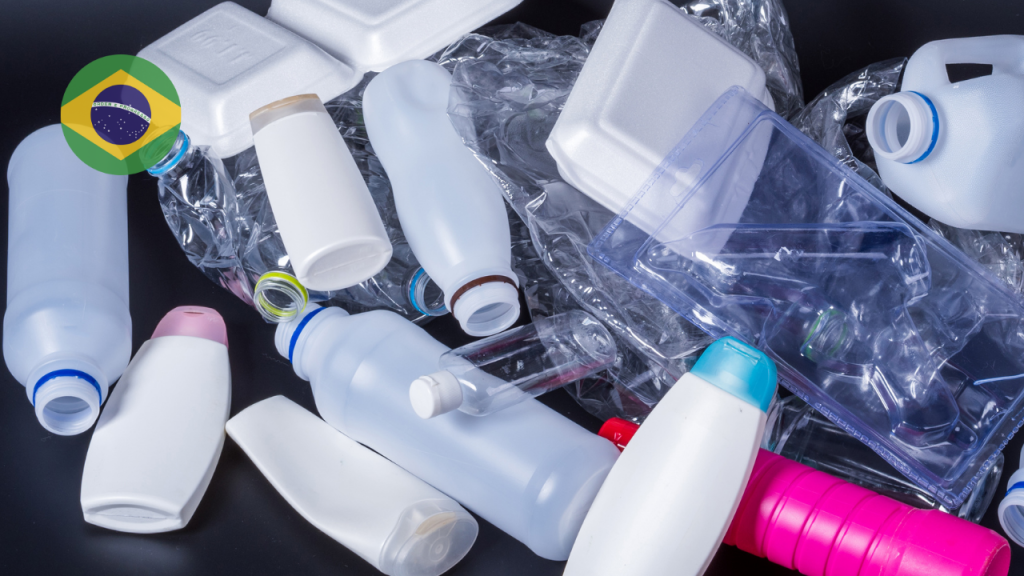
Starting January 2026, all companies that produce, import, distribute or sell plastic packaging in Brazil will be legally required to participate in a reverse logistics system. The regulation, set out under Decree No. 12,688, covers primary, secondary and tertiary packaging, including single-use items such as plastic cutlery.
TABLE OF CONTENTS
How Can Companies Comply?
Under this regulation, every market operator, from manufacturer to retailer, must ensure that plastic packaging is collected and recycled through approved systems that meet national targets for recycled content and recovery.
Firms can comply in two ways: through a collective model managed by an authorized entity, or through an individual model, where the company manages all reverse logistics operations within its own organization.
Both options must follow government-approved standards for packaging collection, recycling, and reporting, ensuring consistency across Brazil’s supply chain.
What Targets Must Be Met?
The decree sets clear national goals to promote circularity in plastic packaging:
- 32 % recovery rate by 2026
- 22 % recycled content in packaging materials by 2026
Targets will increase over time, reaching 37 % recovery and 30 % recycled content by 2030, and 50 % recovery and 40 % recycled content by 2040.
Large companies must comply starting January 2026, while SMEs will have until July 2026. Companies in sectors already governed by specific regulations, such as food packaging, are exempt.
What Do Reverse Logistics Systems Look Like?
Reverse logistics systems may combine multiple elements, including:
- Voluntary drop-off points for consumer returns
- Sorting and processing units, from manual to automated operations
- Facilities for producing post-consumer recycled resins
- Recycling and awareness campaigns
Participants must also establish financial mechanisms to fund their systems, produce educational materials, and install clearly labeled return points to show which packaging can be accepted. Non-returnable items must have alternative, environmentally responsible disposal options.
Who Is Responsible Along the Supply Chain?
Manufacturers are expected to design packaging with recyclability, reuse and durability in mind, while providing clear guidance to consumers on how to clean, separate and return used materials.
Retailers and distributors must store collected packaging until it is sent for proper disposal, and importers share responsibility for transporting collected materials to recyclers or sorting facilities.
Authorized waste operators must wash, clean, and sort used packaging—removing labels, lids, and impurities—before it can be repackaged or recycled.
How Will Compliance Be Monitored?
Companies and management entities must submit annual reports through SINIR, Brazil’s National Information System on Solid Waste Management. These reports must specify:
- The mass of packaging collected, reused and recycled
- The total volume placed on the market
- The extent of compliance with recovery and recycled content targets
This reporting system is said to ensure transparency and allows regulators to track national progress toward circular economy objectives.
Are There Incentives for Higher Collection Rates?
Yes. For every 5 % of returnable packaging collected, manufacturers and importers can reduce their recovery target by 1 %, up to a maximum 50 % reduction. This mechanism encourages companies to expand returnable packaging programs and simultaneously reward higher performance.
Why Is This Important for Brazil’s Circular Economy?
By enforcing reverse logistics and measurable recovery goals, Brazil aims to cut plastic waste, expand nation’s recycling infrastructure, but also strengthen the market for recycled materials. The decree also promotes public education on sustainable disposal and reuse practices, linking industry responsibility with consumer participation.
Conclusion: A Turning Point for the Brazilian Packaging Sustainability
With Decree No. 12,688, Brazil is one step closer to a circular plastic economy. The law demands active participation from every stakeholder and lays out a clear roadmap for accountability and innovation. Starting in 2026, the country’s packaging sector will operate under a framework that prioritizes recovery, recyclability and responsible resource use, setting a benchmark for sustainability across Latin America.