Following the public consultation discussed in our October 2025 article, Denmark has now formally adopted its new Executive Order on Food Contact Materials (FCMs). The final text confirms many of the draft provisions previously outlined while clarifying timelines, enforcement duties and technical requirements. The Order is scheduled to enter into force on July 2026, with the new migration limits for lead and cadmium applying from January 2027. These developments mark the transition from proposal to binding national law and provide businesses with greater certainty on compliance expectations and implementation deadlines.
TABLE OF CONTENTS
Entry into Force Confirmed, With Staggered Application
In our earlier article, we noted that the draft was expected to replace Executive Order No. 681 of 25 May 2020. The adopted version confirms this repeal and formally sets:
- 1 July 2026 as the general date of entry into force
- 1 January 2027 as the date when Section 10 (new migration limits for lead and cadmium) becomes applicable
This implementation gives businesses additional time to adapt testing procedures for ceramic, enameled and glass articles.
Declaration of Compliance (DoC) Requirements
As anticipated in the draft, the final Order confirms strengthened documentation obligations:
- A written Declaration of Compliance (DoC) is required for FCMs marketed in Denmark at stages prior to retail.
- Ceramic articles not yet in contact with food must be accompanied by a specific DoC up to and including the retail stage.
Vinyl Chloride: Detection Method Defined
The adopted Order maintains the strict requirement that food contact materials must not release vinyl chloride in detectable quantities. Detection must follow the analytical method specified in the annex, using gas chromatography with headspace, with a detection limit of 0.01 mg/kg.
Regenerated Cellulose Films: Positive List and EU Alignment
The final Order confirms that regenerated cellulose films may only be manufactured using substances listed in the annex and under specified conditions. It also reiterates that:
- Printed surfaces must not come into contact with food.
- Plastic surface treatments must comply with Regulation (EU) No 10/2011.
This provision remains largely unchanged from the draft, confirming Denmark’s intention to align national rules with EU plastics legislation while retaining specific national controls.
Lead and Cadmium Migration Limits: New Categories Confirmed
Section 10 introduces updated migration limits for lead and cadmium for ceramics enameled articles and glassware (0.2 mg/l for lead, 0.02 mg/l for cadmium), with testing to be carried out according to the specified analytical method in the annex.
The final adoption confirms:
- Refined product categorization
- Clear reference to the testing methodology
- Specific reference to ceramic articles consisting of container fitted with ceramic lid (limits apply to the container only)
- Delayed application until 1 January 2027
PFAS Ban in Paper and Board: Functional Barrier Clarified
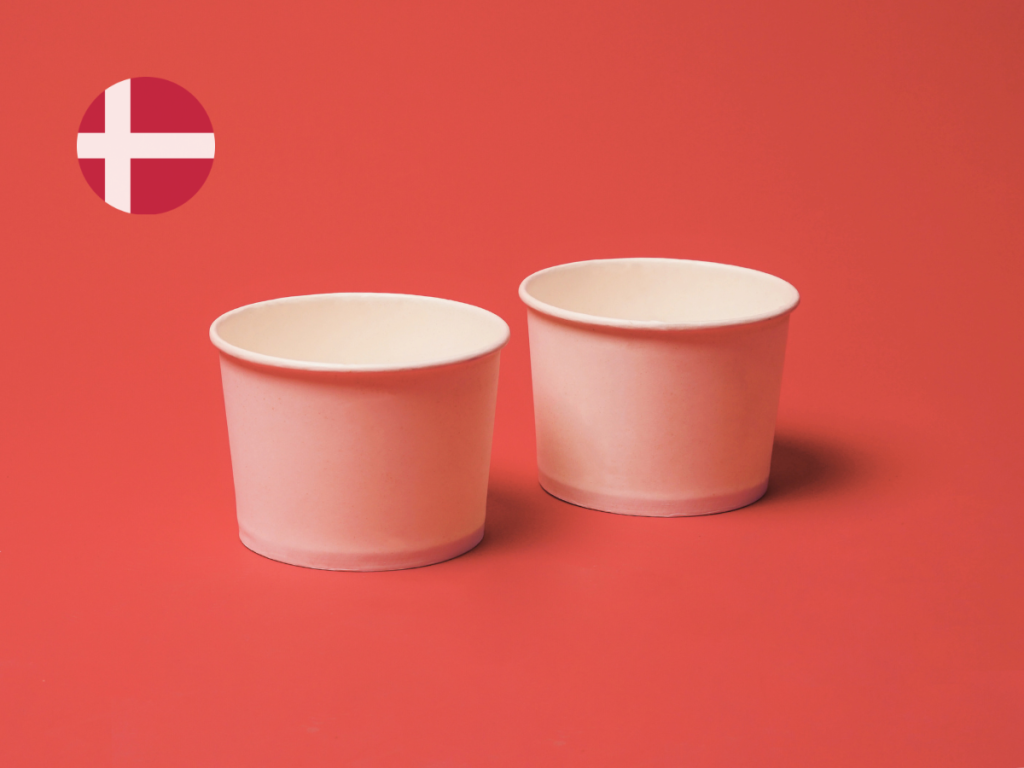
One of the most significant measures remains the restriction on PFAS in paper and board food contact materials. The Order confirms that such materials may not be marketed in Denmark where PFAS are used, unless a functional barrier effectively prevents migration into food. This confirms Denmark’s precautionary approach and reinforces its position at the forefront of PFAS-related packaging controls within Europe, while also providing clearer legal framing for operators assessing barrier performance and material composition.
Explicit Withdrawal Obligations
The adopted version also places clearer emphasis on operator responsibility in cases of suspected non-compliance. Where a business believes or has reason to believe that food contact materials it has produced, imported or distributed do not comply with food safety requirements, it must immediately withdraw the product from the market and notify the Danish Veterinary and Food Administration.
Conclusion
Denmark has now moved decisively from consultation to adoption, confirming stronger documentation duties, stricter chemical controls, clarified PFAS restrictions in paper and board and updated migration limits for ceramics and glassware. While the overall regulatory direction remains consistent with the draft discussed in our earlier article, the formal confirmation of staggered entry into force dates provides important operational clarity for businesses. With general applicability from July 2026 and new heavy metal migration limits applying from January 2027, companies supplying the Danish market should now focus on implementation planning, testing adjustments and documentation updates to ensure full compliance within the established timeframe.