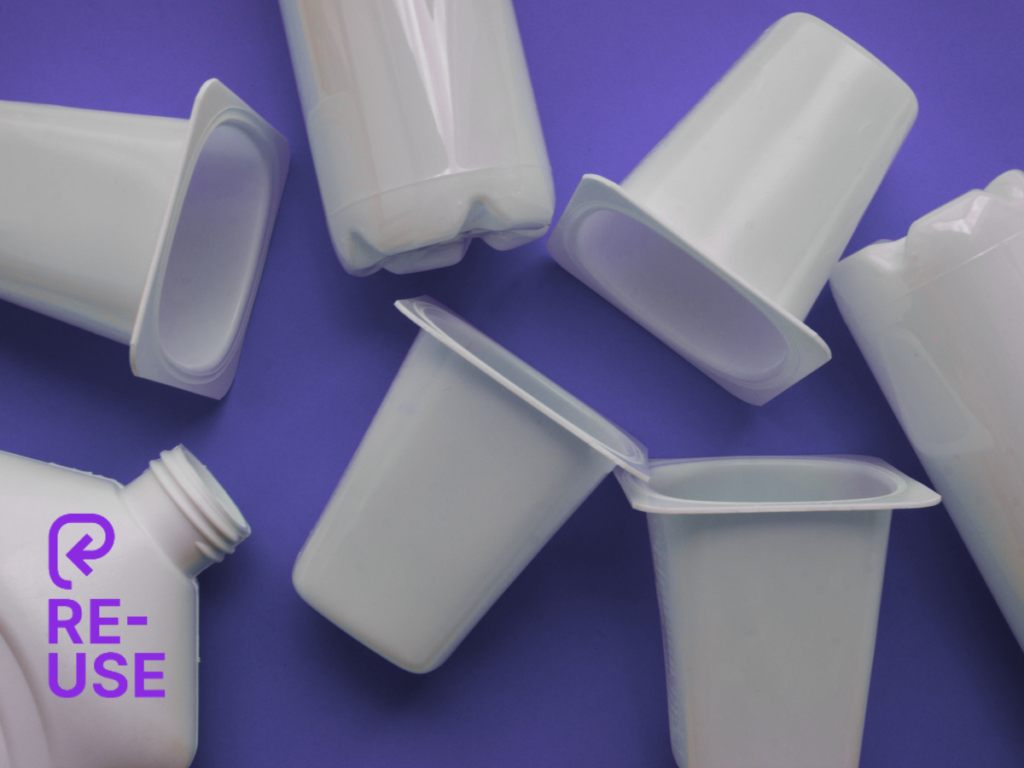
PR3: The Global Alliance to Advance Reuse has launched a new global symbol designed to identify reusable packaging and reuse systems across markets. The symbol, developed through a global design competition called Rebrand Reuse, which received 236 submissions from 29 countries, was selected following consumer research and a legal evaluation process.
TABLE OF CONTENTS
It was created by Epigrama Studios, a design firm based in Colombia. The launch marks the first attempt to establish a universally recognized visual identifier for reuse systems analogous to the chasing arrows recycling symbol that has been in use since its creation in 1970.
Scope and Format of the New Symbol
The symbol is being introduced across a wide range of packaging formats and reuse infrastructure: cups, foodservice containers, wine and beverage bottles, cleaning and homecare product containers, collection bins and logistics vehicles. Its use is tied to specific criteria in the PR3 Marking and Labelling Standard, which is being published through the American National Standards Institute, a formal standardization process that distinguishes it from informal or voluntary environmental claims.
PR3 offers the symbol in two versions: with and without the word “reuse” included, giving operators flexibility for different label sizes and formats. The distinction between closed-loop and open-loop systems is particularly relevant to how the symbol functions in practice:
- Closed-loop systems, such as venue cup return programs or refillable bottles returned to the same outlet, communicate a straightforward proposition: return the item here.
- Open-loop systems, where packaging is taken off-site and returned through designated drop-off points, rely more heavily on consumer familiarity with the symbol and the density of available return infrastructure.
Early Adoption: Portland and Beyond
In the US, reuse and refill businesses in the Portland, Oregon region were among the initial adopters of the symbol. Portland has a well-established reputation as a reuse leader, with an existing density of refill businesses, deposit systems and municipal composting infrastructure that makes it a natural testing ground for new reuse frameworks. The initial US adopters span a range of reuse formats, from venue-based cup return programs to city-wide dish and bottle services, suggesting the symbol is being tested across both closed-loop and open-loop contexts simultaneously, which will generate useful real-world data on where the visual identifier performs best.
Internationally, the launch covers Australia, Canada, Egypt, Indonesia, Colombia, the UK and the United Arab Emirates, reflecting PR3’s ambition to establish the mark as a genuinely global standard rather than a US-centric initiative.
The Broader Context: Reuse Targets and Regulatory Pressure
PR3 estimates that reuse systems can reduce single-use packaging production by up to 90% and cut associated emissions by up to 80%, relative to equivalent single-use formats. Whether those figures are achievable at the scale the PPWR envisions depends on infrastructure investment, retailer participation and consumer behavior, factors that a symbol alone cannot determine, but that consistent, trusted labelling can support.
Conclusion
The chasing arrows symbol took decades to become genuinely ubiquitous and the reuse mark faces the same challenge: recognition has to be built through consistent use across enough formats and geographies to become intuitive. The symbol is trademarked by PR3 and is specifically designed to help consumers differentiate reusable packaging from recyclable and single-use alternatives, keeping reusable items out of recycling streams, landfill and other waste systems where they do not belong. How quickly it translates into the kind of instant consumer recognition that the recycling symbol has, will depend on the pace of adoption across sectors and on the regulatory pressure applied to single-use alternatives.